

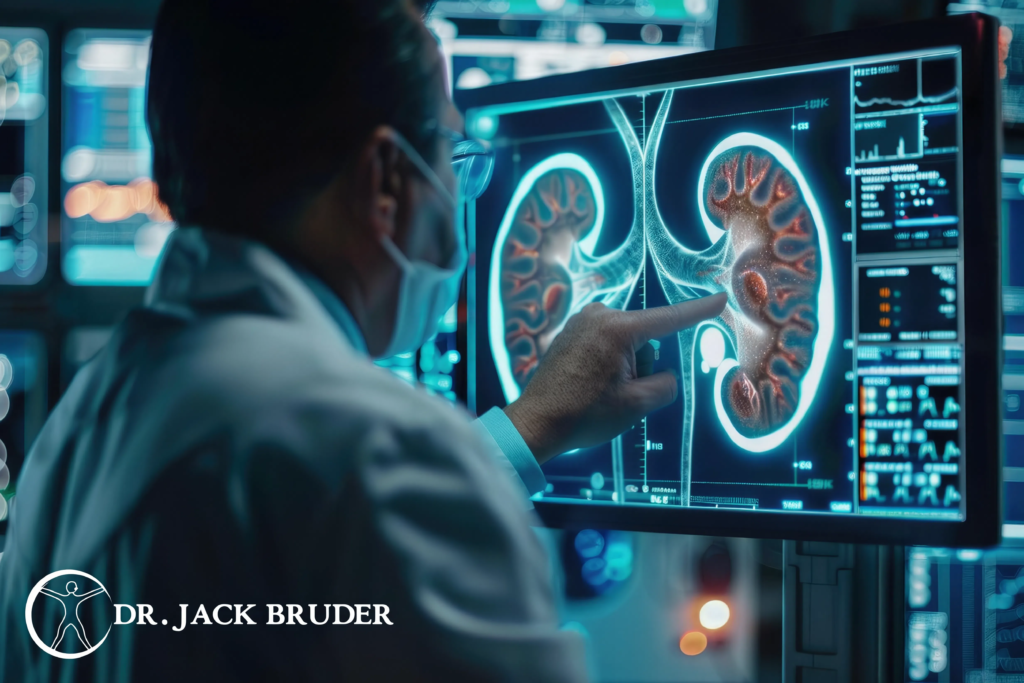
Every year, the tools we use in urology grow more precise, more comfortable, and more tailored to the individual man sitting across from us. In our practice, we have always believed that thoughtful adoption of new technology is one of the most direct ways we can improve the lives of the men we care for. We do not chase novelty for its own sake. Instead, we ask a simple question about every new device, imaging method, or treatment protocol: does this help our patients feel better, recover more comfortably, or understand their health more clearly? When the honest answer is yes, we bring it into our care. When the evidence is thin or the benefit is uncertain, we wait, watch the research, and keep our patients informed.
We want to walk you through how modern technology is shaping the treatment options we offer, from the first diagnostic conversation through long-term follow-up. Our goal is to help you feel informed and confident, whether you are managing erectile dysfunction, premature ejaculation, or a broader men’s health concern. Throughout, we will be candid about what technology can do well and where its limits lie, because honesty is part of good medicine.
How Do New Technologies Improve Urological Diagnosis?
New diagnostic technologies help us identify the likely cause of a urological problem earlier and with greater accuracy. Modern ultrasound, advanced laboratory testing, and refined imaging allow us to see and measure what earlier generations of physicians could only estimate. When we understand a condition more precisely, we can build a treatment plan that fits the person rather than a generic category.
For many men, the value of better diagnostics is emotional as much as clinical. A clear, well-explained diagnosis removes uncertainty, and uncertainty is often the heaviest part of a health concern. We frequently find that when we can show a patient what is happening in his body, the conversation shifts from fear to problem-solving. As a trusted urology doctor Manhattan resource, we make it a priority to translate technical findings into plain language during every visit, so no one leaves confused about what we found or what it means.
What Diagnostic Tools Do We Rely On Most?
- High-resolution ultrasound to assess blood flow and tissue health without discomfort.
- Comprehensive laboratory panels that evaluate hormones, cardiovascular markers, and metabolic health.
- Structured symptom questionnaires that help us track change over time in a measurable way.
These tools work best together. A single result rarely tells the whole story, so we combine data points to form a complete picture before we recommend anything. We also explain that a test is a snapshot, not a verdict, and that we sometimes repeat or add studies as a man’s situation becomes clearer.
How Is Technology Changing Erectile Dysfunction Treatment?
Technology has expanded erectile dysfunction treatment well beyond a single pill. Today we can consider a range of evidence-based options, and we match the approach to the man’s health history, preferences, and underlying cause. Some men respond well to oral medications, while others may benefit from vacuum devices, injectable therapies, or lifestyle-focused programs supported by careful monitoring.
We want to be honest and measured here: no device or treatment guarantees a result for everyone, and effectiveness depends heavily on the underlying cause and a person’s overall health. That is exactly why individualized evaluation matters so much. For men searching for an experienced erectile dysfunction doctor New York City they can visit with confidence, we emphasize a thorough workup before any treatment decision, never a rushed prescription.
Erectile dysfunction can also be an early signal of cardiovascular or metabolic conditions, which is a point we take seriously. Because of that connection, we sometimes coordinate with primary care or cardiology so that a sexual health concern does not overshadow something more consequential for the heart. We encourage men to read reliable background information from the National Institute of Diabetes and Digestive and Kidney Diseases (NIDDK), which offers clear, non-commercial explanations of how these systems interact.
How Do Modern Tools Support Premature Ejaculation Care?
Modern care for premature ejaculation combines behavioral techniques, medication when appropriate, and structured tracking that helps us measure progress over time. Technology supports this work by giving us better ways to record symptoms, monitor response, and adjust plans in a way that feels collaborative rather than clinical. It does not replace the human conversation at the center of care; it strengthens it.
We often begin with education, because many men have absorbed myths that add unnecessary stress. When we can show a man that his experience is common, frequently treatable, and not a personal failing, the care itself tends to work better. We combine that reassurance with practical tools and consistent follow-up so that improvement is sustainable rather than temporary. We are always careful to frame results as realistic possibilities, not promises.
What Role Does Data Play in These Plans?
Careful tracking lets us see what is actually working. Instead of relying on memory alone, we use structured check-ins to notice patterns, refine an approach, and adjust behavioral strategies. This measured method helps us avoid guesswork and keeps the plan grounded in real observations rather than impressions. When something is not helping, the data tells us sooner, so we can change course without wasting a man’s time.

How Does Technology Make Care More Comfortable and Private?
Newer technologies often make urological care less invasive and more discreet, which matters deeply to the men we serve. Smaller instruments, gentler procedures, and streamlined office workflows can reduce discomfort and protect privacy. Many men delay seeking help because they feel embarrassed, so anything that lowers that barrier is a genuine clinical benefit, not a mere convenience.
We also use secure digital systems to communicate results and coordinate follow-up. This helps men stay engaged with their care between visits without feeling exposed. Protecting dignity is not a side feature of good medicine; for us, it is central to it. For general men’s health guidance that we trust, we frequently point patients to the Centers for Disease Control and Prevention (CDC) Men’s Health resources as a reliable starting point for reading between appointments.
How Do We Decide Which Technology Is Right for Each Patient?
We choose technology based on the individual, never on what is simply newest or most heavily marketed. Our decision rests on four factors: the likely cause of the condition, the strength of the medical evidence, the patient’s overall health, and the person’s own goals and comfort. A tool that is ideal for one man may be unnecessary, or even inappropriate, for another.
This is where the human side of medicine remains irreplaceable. Technology gives us better information and more options, but judgment, listening, and trust still drive the plan. As a dedicated urology doctor NYC team, we see our role as helping each man weigh his choices clearly and without pressure, so the decision genuinely belongs to him.
- We explain the benefits and the limits of every option honestly.
- We never promise outcomes that the evidence cannot support.
- We revisit the plan regularly and adjust it as a man’s needs change.
What Should Men Keep in Mind About New Urology Technology?
The most important thing to remember is that technology is a means, not the goal. The goal is your health, your confidence, and your quality of life. Advanced tools help us pursue that goal more reliably, but they work best inside a relationship built on trust and honest communication. A device is only as valuable as the careful evaluation and follow-up that surround it.
We also remind men that no article, device, or online resource replaces a personal evaluation. Every man’s situation is unique, and symptoms that seem minor can sometimes point to conditions that deserve prompt attention. We always encourage you to consult a qualified healthcare provider before making decisions about your care. For broader public health information, the U.S. Department of Health & Human Services (HHS) is another reliable reference we recommend for men who want to keep learning.
If you have been putting off a concern about erectile dysfunction, premature ejaculation, or any aspect of your urological health, we would be honored to help. We invite you to reach out to our practice so we can listen to your story, evaluate your health carefully, and explore the treatment options that fit your life. You deserve care that is modern, compassionate, and centered entirely on you, and that is exactly what we strive to provide every day.

What the Future of Urology Technology Means for the Men We Serve
Looking Forward With Honest Optimism
In more than three decades of practicing urology in New York City, I have watched the technological landscape of my specialty transform in ways that would have been difficult to predict at the start of my career. The diagnostic tools available to me today, the treatment options I can offer, and the precision with which I can match interventions to the individual biology and goals of each patient I serve are all meaningfully superior to what existed when I began. And the pace of that advancement, if anything, is accelerating.
I want to be honest about what this means in practical terms, because I think the conversation around medical technology is often pulled in two unhelpful directions simultaneously. On one side, there is uncritical enthusiasm that treats every new device or technique as a breakthrough before the evidence justifies that characterization. On the other side, there is reflexive skepticism that resists change and undervalues genuine advances that can meaningfully improve patient outcomes. Neither posture serves the men I care for, and neither is consistent with the evidence-based, patient-centered approach that defines how I practice medicine.
What I can say with genuine confidence is this: the trajectory of urological technology is pointed in a direction that is good for men’s health. Diagnostic tools are becoming more precise, less invasive, and more capable of characterizing the biological complexity of conditions like erectile dysfunction, premature ejaculation, and prostate disease at the level of the individual patient rather than the statistical average. Treatment options are expanding in ways that give men and their physicians more choices, better matched to the specific drivers of each man’s condition. And the integration of digital health tools into ongoing monitoring and follow-up care is making it easier to stay connected, to catch changes early, and to adjust treatment plans with the timeliness that good long-term management requires.
As a urology doctor Manhattan committed to bringing the best available medicine to the men of New York City, I follow these developments closely, evaluate them critically, and incorporate them into my practice when the evidence supports doing so. That commitment is ongoing, not occasional, and it reflects my conviction that the men who trust me with their care deserve a physician who is always working to ensure that what he offers them reflects the current best of what medicine can provide.
The Technologies I Am Watching Most Closely
I want to share with my patients some of the specific areas of technological development in urology that I am following with particular interest, because I believe they have genuine potential to improve the care I provide over the coming years and I want the men I serve to understand the direction in which the field is moving.
Advances in imaging technology, including improvements in multiparametric MRI and the development of higher-resolution ultrasound platforms, are continuing to enhance our ability to detect and characterize prostate disease earlier and more accurately than was previously possible. These improvements translate directly into more precise treatment decisions, fewer unnecessary procedures, and better outcomes for men navigating prostate health concerns at every point on the risk spectrum.
In the area of erectile dysfunction, emerging research into regenerative and vascular therapies, including the ongoing investigation of low-intensity shockwave therapy and platelet-rich plasma approaches, is exploring whether the underlying vascular damage driving erectile dysfunction can be addressed more directly than current treatments allow. I follow this research carefully and discuss it honestly with my patients when they ask, because I believe men deserve to understand both the promise and the current limitations of emerging approaches before making decisions about their care.
Digital health tools for remote symptom tracking, structured patient-reported outcome collection, and secure provider-patient communication between appointments are also advancing in ways that I expect to incorporate more fully into my ongoing monitoring protocols. These tools support the kind of continuous clinical awareness that long-term urological health management requires, and they do so in ways that reduce the burden on patients without reducing the quality of clinical oversight.
I direct patients who want to understand the research investment driving these advances to resources maintained by the National Institute of Diabetes and Digestive and Kidney Diseases (NIDDK), which funds and communicates urological and metabolic health research at the frontier of the field. Understanding where the science is heading helps men engage with their own care as informed participants rather than passive recipients of whatever their physician happens to recommend.
If you are ready to experience urological care that combines the best available technology with the kind of genuine, long-term patient relationship that produces real health outcomes, we invite you to contact Luzato Medical Group today and schedule your consultation with Dr. Bruder, MD. We are here, we are current, and we are committed entirely to you.